phd research
The past climate of northern mexico
Developing records for Mexico's past climate (paleoclimate) helps us predict future climate changes, understand the impact on environment and people, and develop strategies to adapt and mitigate climate change. Mexico is particularly important for paleoclimate research due to the lack of records that currently exist in the Northern region.
Stalagmites are well-preserved, chemical sedimentary rocks that form as a result of the precipitation of calcite from cave drip water. We can analyze the layers of the rock formation to generate records of climate change. The variations in the isotope and trace elements of the layers help us infer changes in cave conditions and the climate in the past.
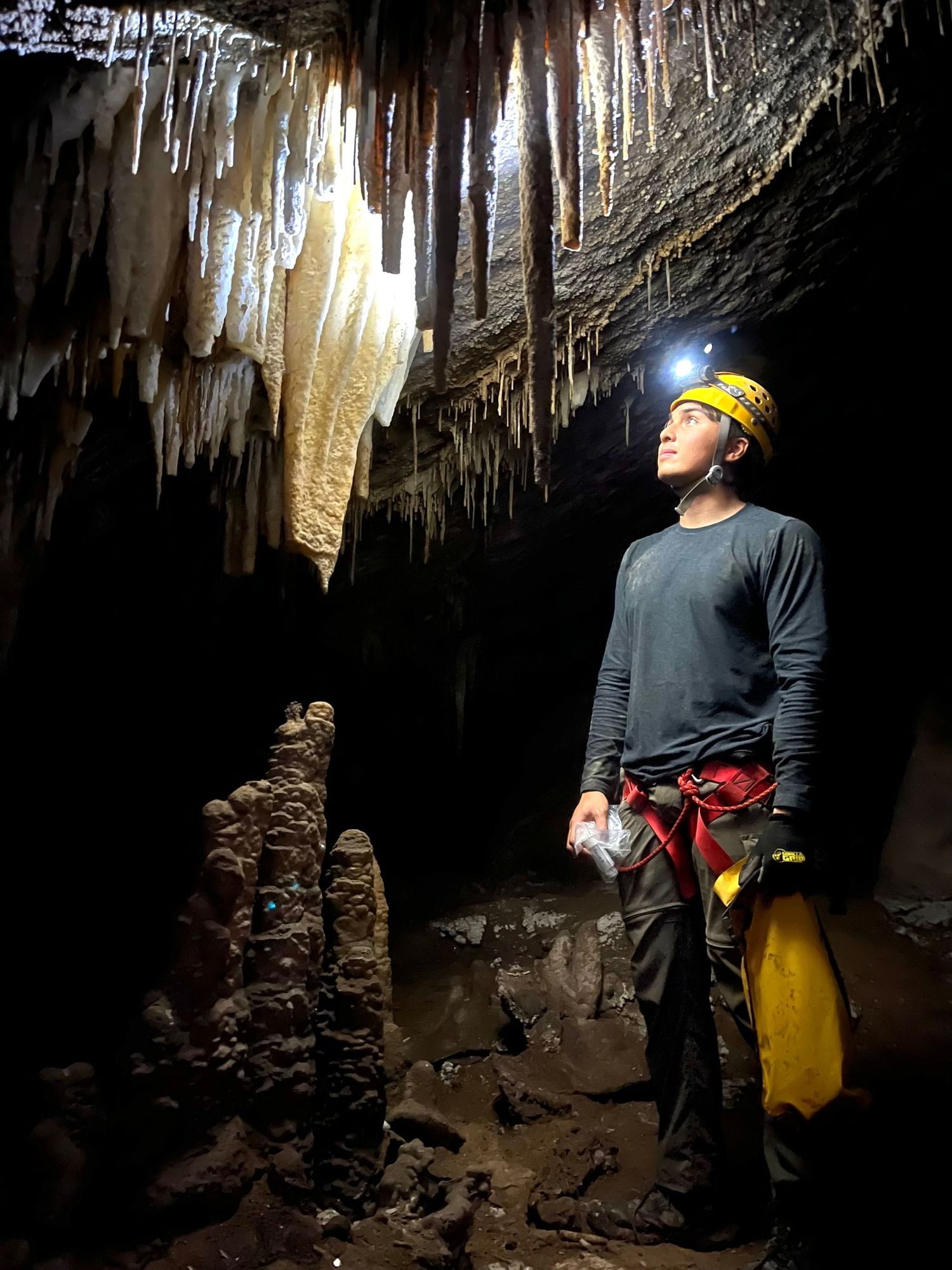
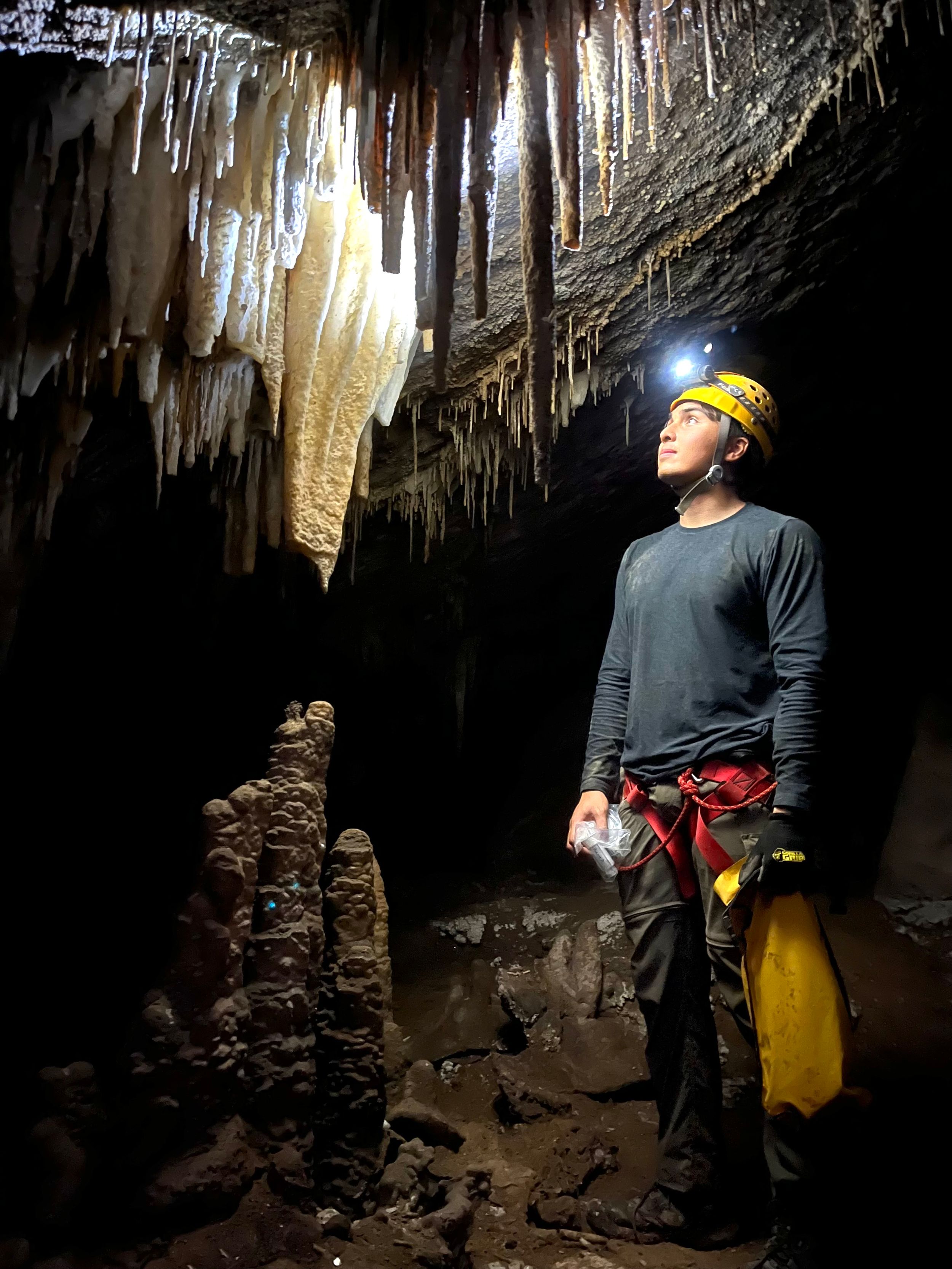
Pictured: Bryant in a cave near San Luis Potosí, Mexico
SCIENCE COMMUNICATAION
Stories Beyond the Caves
My passion for storytelling began at UC Santa Barbara. I worked as a free-lance journalist, writing for a Facebook page called "Humans of UCSB." By day, I would interview people around campus, learning and writing new stories about how they grew up and the environments that made them who they are; by night, I worked in a lab as an undergraduate researcher in a paleoclimate lab, reconstructing past environments using tiny plankton from the bottom of the ocean. At some point, I realized I was doing the same thing the entire day: storytelling.
By the time I started graduate school, my passion for storytelling manifested into science communication. As the Science Communications Fellow for the Department of Earth System Science from 2022-2023, I worked to communicate and highlight the amazing research of our graduate students and faculty. My greatest achievement during this time was producing an "Earth Month Takeover" video series to highlight how our department "Invests in our Planet" during Earth Month 2022 and 2023.
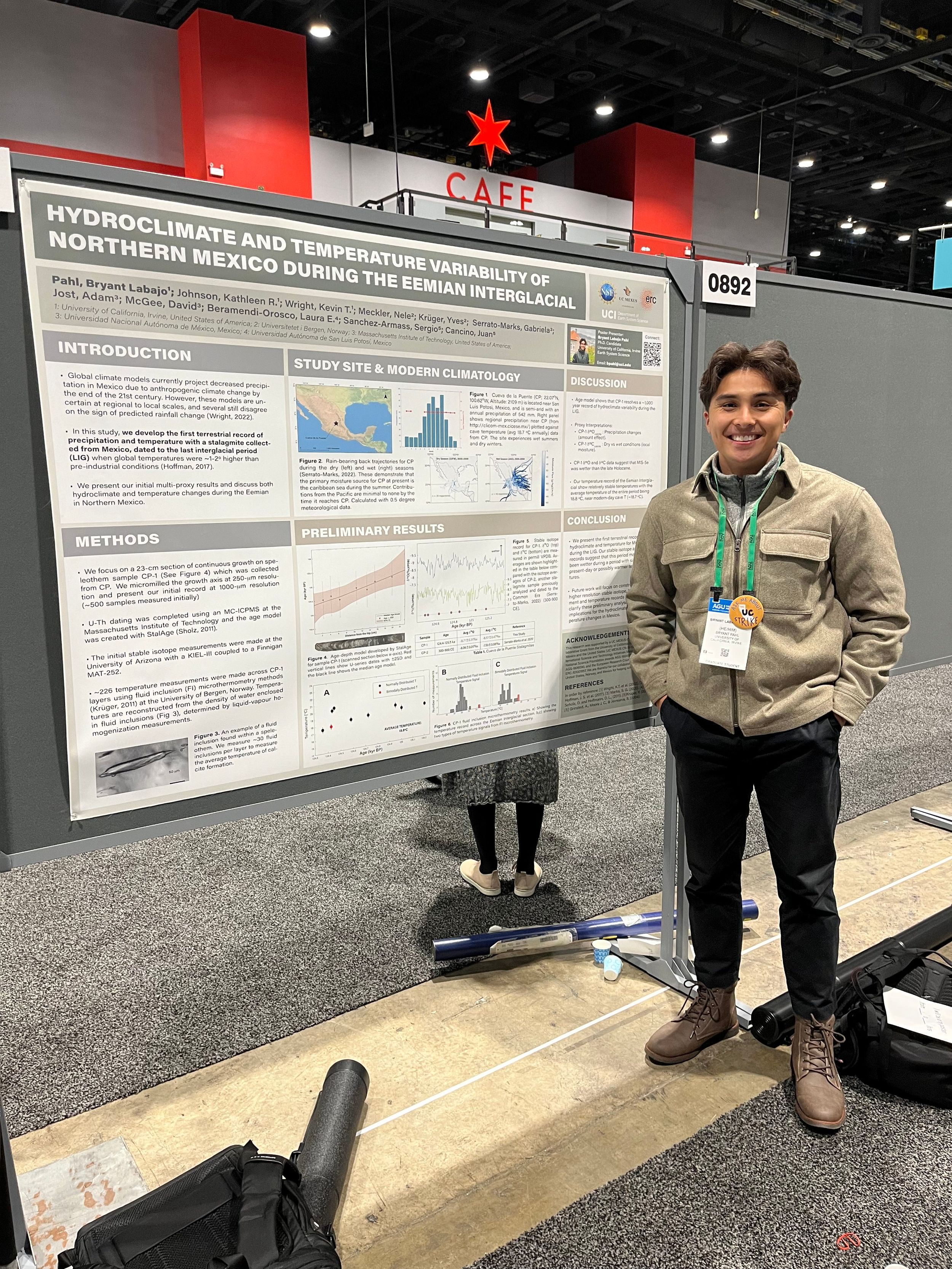
Since then, I have done everything I can to maintain my skills in science communication. Whether I'm disseminating my work to researchers at professional conferences, or pitching my work to general audiences in competitions like the UCI Grad Slam - I will always be a storyteller.

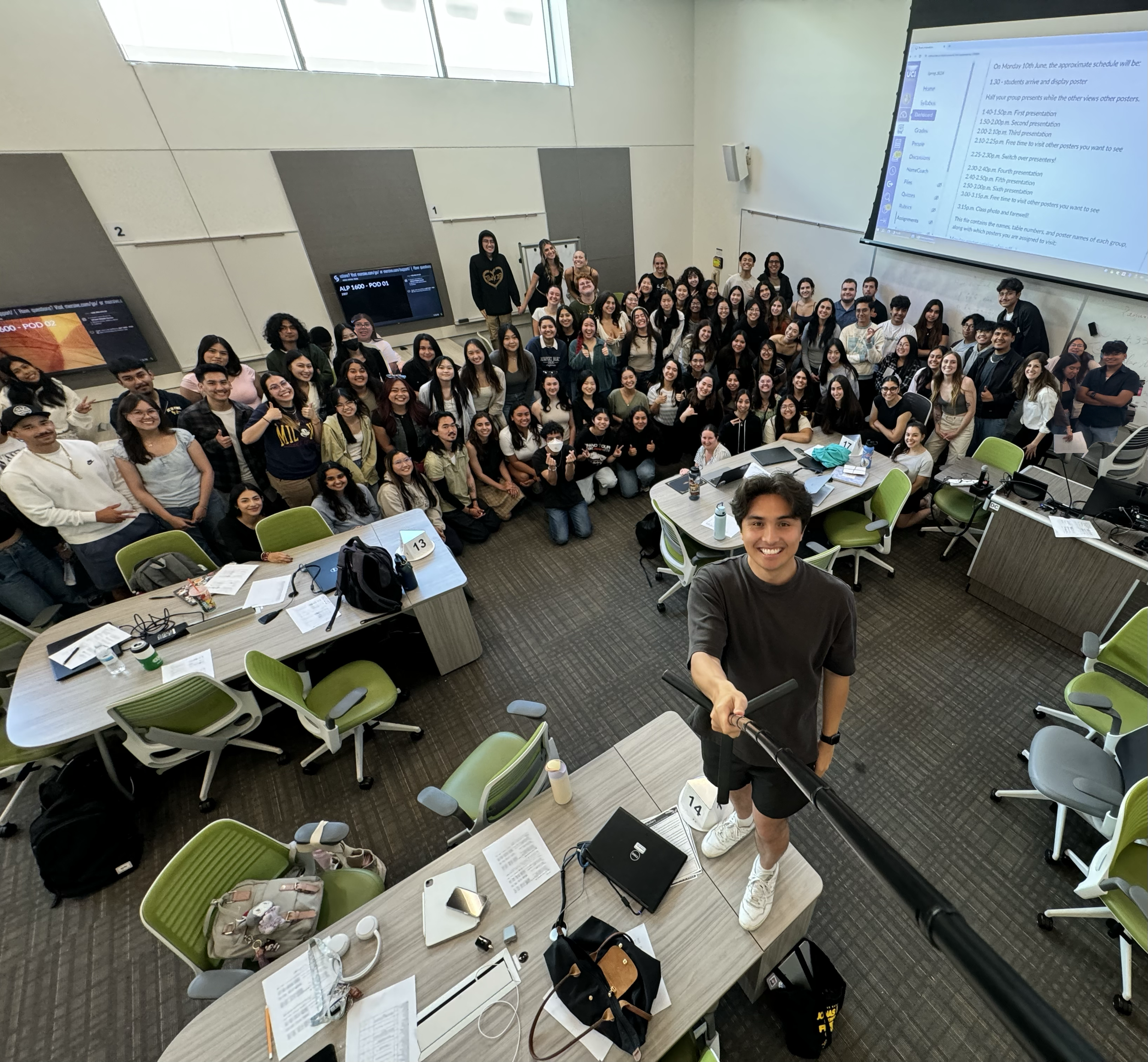
Pictured: Bryant presenting as a grand finalist for the UCI Grad Slam Pitch Competition
Bryant's Earth Month Takeover
In this video, I describe my research interest, my pathway to geoscience, and how my research helps "invest in our planet." I generated this video as a third-year graduate student and science communications fellow for my department. Enjoy!
Video Courtesy of UCI School of Physical Sciences
Bryant's Grad Slam 2024 Pitch
In this video, I give a 3-minute pitch as one of the top-ten finalists for the UCI Grad Slam competition. I present on my research using LiDAR and photogrammetry in caves to better "translate" the messages we read from stalagmites. Enjoy!
If not automatically prompted, the pitch starts at 42:16.
Video Courtesy of UCI Grad Division
Bryant at Work: